+1 877 781 3006
 (52) 554-870-5682
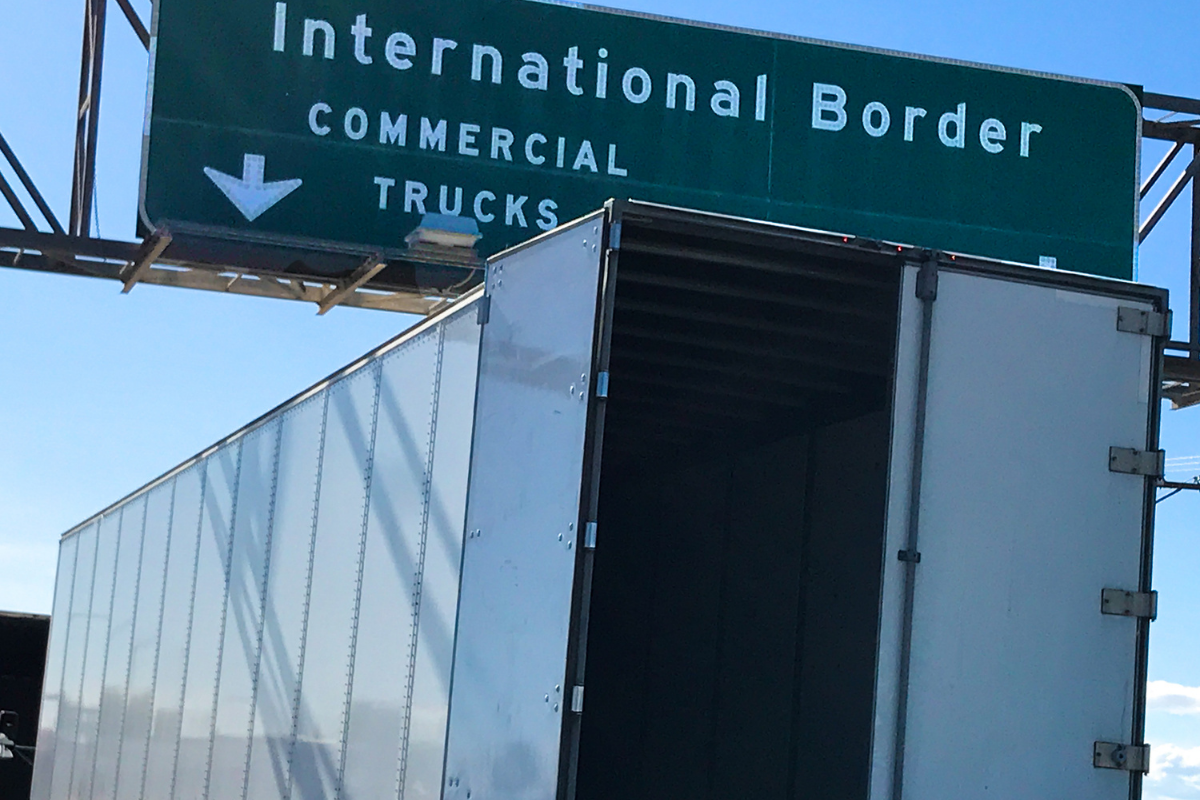
A Practical Guide for Shippers Moving Freight Across Borders
Cross-border freight is one of those logistics topics that sounds straightforward on the surface. Move freight from one country to another. But it quickly becomes complex once you’re actually responsible for making it happen. Regulations, customs clearance, documentation, carrier coordination, border delays, tariffs, and compliance requirements all play a role. When one piece breaks down, shipments stall, costs rise, and customer trust takes a hit.
At Native American Logistics (NAL), we work with shippers every day who ask the same question: “How does cross-border freight actually work?” Today we’ll look at real-world insight instead of buzzwords, so you can understand what’s happening behind the scenes and how to avoid costly mistakes.
What Is Cross-Border Freight?
Cross-border freight refers to the transportation of goods from one country to another, most commonly between the United States, Mexico, and Canada. While the physical movement of freight may look similar to domestic shipping, cross-border logistics introduces an entirely new layer of complexity: international trade compliance.
Unlike domestic shipments, cross-border freight requires:
-
Customs documentation
-
Trade compliance checks
-
Harmonized tariff classifications
-
Country-specific regulations
-
Coordination between multiple parties on both sides of the border
Success depends on planning, experience, and communication – long before the truck ever reaches the border.
Step 1: Pre-Shipment Planning (Where Most Problems Are Prevented)
The most important part of cross-border freight happens before the shipment is picked up.
Key Questions That Must Be Answered Up Front:
-
What is being shipped?
-
Where is it being manufactured?
-
Who is the importer of record?
-
What trade agreement applies (USMCA, non-preferential, etc.)?
-
Are there duties, tariffs, or special requirements?
-
Is the product restricted or regulated?
Incorrect answers at this stage often lead to:
-
Customs holds
-
Unexpected duties
-
Border delays
-
Rejected shipments
At NAL, we focus heavily on front-end freight management, ensuring documentation, routing, and compliance are aligned before the shipment ever moves.
Step 2: Documentation & Compliance
Documentation is the backbone of cross-border freight. Missing or inaccurate paperwork is one of the most common reasons shipments get delayed.
Common Cross-Border Documents Include:
-
Commercial Invoice
-
Packing List
-
Bill of Lading
-
Certificate of Origin
-
Customs Power of Attorney
-
Import/Export Declarations
-
Harmonized System (HS) Codes
Each document must match exactly. Even small discrepancies, such as weight differences or inconsistent product descriptions, can trigger inspections or holds.
This is where experienced logistics partners add significant value. A strong cross-border logistics provider doesn’t just move freight; they validate documentation and compliance before problems occur.
Step 3: Customs Brokerage & Clearance
Customs clearance is the official process of declaring goods to the government of the importing country. This step determines whether your freight is:
-
Immediately cleared
-
Flagged for inspection
-
Delayed due to missing information
-
Assessed additional duties or penalties
Customs Brokers Play a Critical Role
Licensed customs brokers submit documentation, communicate with customs agencies, and ensure compliance with local regulations. However, brokers and carriers must be properly aligned.
One common issue we see is the disconnection between transportation and brokerage, leading to:
-
Missed clearance windows
-
Freight arriving before paperwork is approved
-
Trucks waiting at the border
At Native American Logistics, we coordinate closely with brokers to ensure transportation and clearance move in sync.
Step 4: Crossing the Border (The Physical Movement)
Once approved, the documentation and customs clearance is in place, the freight’s ready to cross.
Common Border-Crossing Methods:
-
Direct Cross (Through-Trailer): The same truck and trailer cross the border.
-
Transloading: Freight’s transferred to a different trailer or carrier on the other side.
-
Drop-and-Hook: Trailer is dropped at the border and picked up by another carrier.
Each option has trade-offs related to:
-
Cost
-
Transit time
-
Cargo security
-
Capacity availability
Choosing the right method depends on shipment type, urgency, risk tolerance, and border conditions. Experienced freight management helps shippers make informed decisions rather than defaulting to one-size-fits-all solutions.
Step 5: Post-Clearance Transportation
Once across the border, freight continues its domestic journey in the destination country. While this may feel like “the easy part,” problems can still arise if:
-
Delivery appointments aren’t coordinated
-
Local carriers lack visibility
-
Tracking systems aren’t aligned
-
Communication breaks down
True cross-border logistics doesn’t end at the border. It extends through final delivery and confirmation.
NAL emphasizes end-to-end visibility, ensuring customers know:
-
Where their freight is
-
Who has it
-
When it will deliver
-
What to expect next
Common Cross-Border Freight Challenges (and How to Avoid Them)
1. Border Delays
Often caused by documentation issues, inspections, or capacity constraints.
Solution: Proactive planning and compliance checks before pickup.
2. Unexpected Costs
Tariffs, duties, detention, and demurrage can quickly add up.
Solution: Clear cost modeling and trade expertise upfront.
3. Poor Communication
Multiple parties across countries increase the risk of misalignment.
Solution: A single logistics partner managing coordination and accountability.
4. Capacity Constraints
Border regions are highly competitive for trucks.
Solution: Strong carrier relationships and flexible routing options.
Why Cross-Border Freight Requires Specialized Expertise
Cross-border freight isn’t just domestic shipping with a longer distance. It’s a specialized discipline that blends:
-
Transportation management
-
Trade compliance
-
Risk mitigation
-
International coordination
Shippers who treat it like standard freight often learn the hard way, through delays, penalties, and customer dissatisfaction.
At Native American Logistics, our cross-border logistics approach is built around:
-
Compliance-first planning
-
Strong broker and carrier partnerships
-
Clear communication at every stage
-
Metrics-driven freight management
-
Proactive problem-solving
We don’t just move freight, we manage complexity.
How Native American Logistics Supports Cross-Border Freight
NAL provides comprehensive cross-border logistics solutions designed to reduce risk and improve performance, including:
-
Cross-border freight management
-
Broker coordination
-
Carrier vetting
-
Real-time visibility
-
Performance tracking
-
Continuous process improvement
Whether you ship occasionally or move high volumes across borders, our team ensures your freight moves efficiently, compliantly, and reliably.
Understanding how cross-border freight actually works empowers shippers to make better decisions, ask the right questions, and avoid costly disruptions. With the right logistics partner, international freight doesn’t have to feel overwhelming.
If you’re looking for a partner who understands both the operational and compliance side of cross-border logistics, Native American Logistics is ready to help.
Have questions about cross-border freight or an upcoming international shipment?
Talk to a real logistics expert: no obligation, no pressure. Contact Native American Logistics to get clarity before your freight moves.

Jeff Berlin
is the Chief Operating Officer of E.L. Hollingsworth & Co. and serves as the Senior Operations Executive for TOP Worldwide and Native American Logistics. With over 30 years of experience leading logistics and trucking companies, he brings deep industry expertise to his role. Jeff is also a CDL-A driver and a private pilot.
Have a question about freight? Call or text Jeff directly at (810) 656-6343 or jberlin@elhc.net.