+1 877 781 3006
 (52) 554-870-5682
Fuel prices are about to move upward. Global tensions and supply risks are already pushing oil markets higher, and the ripple effects will reach transportation and logistics quickly.
When oil supply becomes uncertain, markets react fast. Even the possibility of disruption can send prices climbing as traders anticipate tighter supply. That is exactly what is happening right now.
At the center of the concern is the Strait of Hormuz, one of the most critical oil transit routes in the world. Roughly 20 million barrels of crude oil and petroleum products move through this narrow waterway every day. That represents about 20% of global petroleum consumption and nearly a third of all oil transported by sea.
Because so much oil flows through this single corridor, any threat to its operation immediately raises alarms across global energy markets.
Why Oil Prices Are Increasing
Recent geopolitical tensions have created uncertainty around shipping activity in the Strait of Hormuz. Military warnings, increased security risks, and rising insurance costs for vessels operating in the region have already caused shipping companies to rethink their routes.
Even without a complete shutdown, disruptions like these slow the movement of oil and increase the perceived risk of supply shortages. Markets respond quickly to that uncertainty.
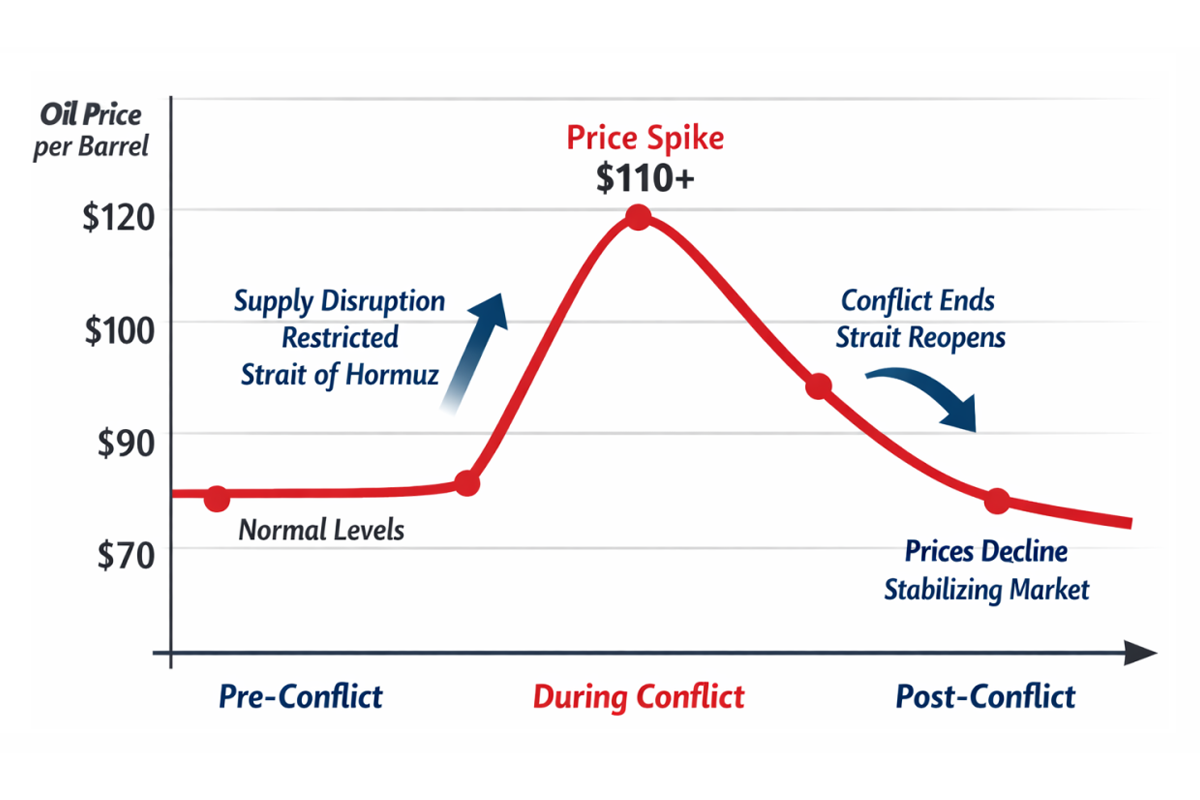
As a result, oil prices have already begun to climb. Brent crude rose sharply as traders reacted to the potential for supply interruptions. When markets believe supply may tighten, prices adjust immediately in anticipation of future shortages.
Why Markets React So Quickly
Oil markets respond aggressively to supply risks because both production and demand move slowly in the short term. Refineries cannot instantly switch supply sources, and producers cannot rapidly increase output overnight.
That imbalance means even a relatively small disruption can cause a large price increase. Several factors may help limit how high prices climb:
- Global oil inventories provide a temporary buffer
- Some oil producing nations have limited spare production capacity
- Alternative transportation routes can move smaller volumes of crude
However, these options only reduce the impact. They cannot fully replace the massive volume of oil that moves through the Strait of Hormuz each day.
What Analysts Expect Next
Many analysts believe oil prices will continue climbing in the near term if tensions remain elevated. Brent crude could approach the $90 to $100 range before stabilizing.
At the same time, several factors could help prevent extreme price spikes:
- Strong oil production in the United States
- Strategic reserves that can be released if needed
- Additional supply from oil producing nations if disruptions persist
Because of these balancing forces, markets expect an increase in prices but not a long term supply crisis.
How Long the Increase Could Last
In many geopolitical situations, fuel price increases last several weeks before markets begin to stabilize. If tensions ease and shipping routes reopen, prices often decline as supply returns to normal.
Analysts suggest elevated prices could persist for four to six weeks before gradually settling. A full return to earlier price levels may take one to three months depending on how quickly global shipping patterns recover.
What Rising Fuel Prices Mean for Shippers
Fuel is one of the largest operating costs in transportation. When oil prices rise, the impact moves quickly through the supply chain in the form of fuel surcharges and higher shipping costs.
For shippers, that creates immediate pressure on freight budgets and transportation planning. Companies that rely on consistent shipping schedules must adapt quickly to changing market conditions.
That is where strong logistics partnerships become critical.
Partnering With Native American Logistics During Market Shifts
Fuel price volatility is a reality in global logistics. Businesses that succeed during these market swings rely on logistics partners who understand how to navigate changing conditions.
At Native American Logistics, we help customers stay ahead of rising transportation costs through strategic routing, strong carrier relationships, and real time visibility across the freight network. Our team works proactively to secure reliable capacity and keep shipments moving efficiently even when fuel prices and market conditions shift.
If rising fuel costs are affecting your transportation strategy, NAL is ready to help. Contact our team today to learn how we can optimize your freight operations and keep your supply chain running smoothly.

Jeff Berlin
is the Chief Operating Officer of E.L. Hollingsworth & Co. and serves as the Senior Operations Executive for TOP Worldwide and Native American Logistics. With over 30 years of experience leading logistics and trucking companies, he brings deep industry expertise to his role. Jeff is also a CDL-A driver and a private pilot.
Have a question about freight? Call or text Jeff directly at (810) 656-6343 or jberlin@elhc.net.